Research Sep 2025 – May 2026
Pending publication

Stanford Neuromuscular Biomechanics Lab

As part of the hardware team at Stanford's NMBL, I worked on developing ultrasound-based systems aimed at noninvasive blood pressure measurement. The work spanned circuit board assembly, mechanical enclosure design, signal processing, and experimental validation. Full materials will be shared following publication.

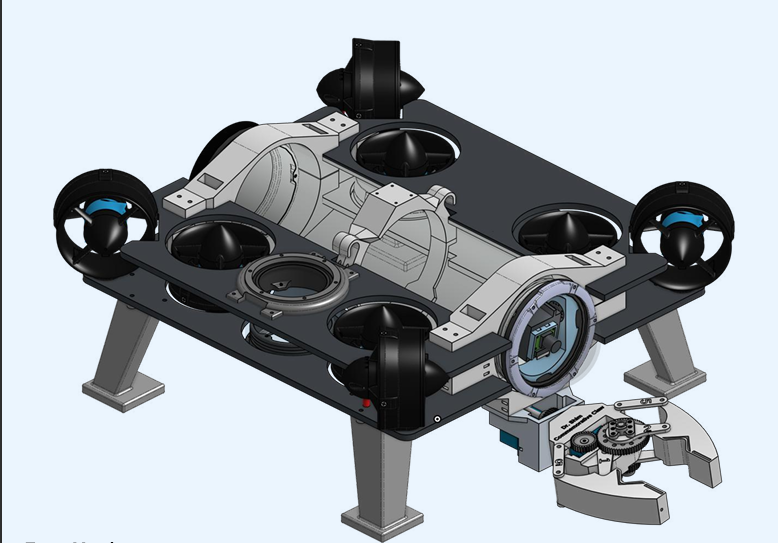
The 2024 WarriorTides ROV
Underwater Robotics Sep 2020 – Aug 2024

MATE ROV Competition — President, Mechanical Team

Four years designing, building, and competing with submersible ROVs through the MATE Worldwide competition program — as a student, team president, and ultimately mentor. The team placed 4th internationally in Kingsport, TN. Design work encompassed buoyancy systems, mechanical assemblies, and fabricated components across all four seasons.

Program overview
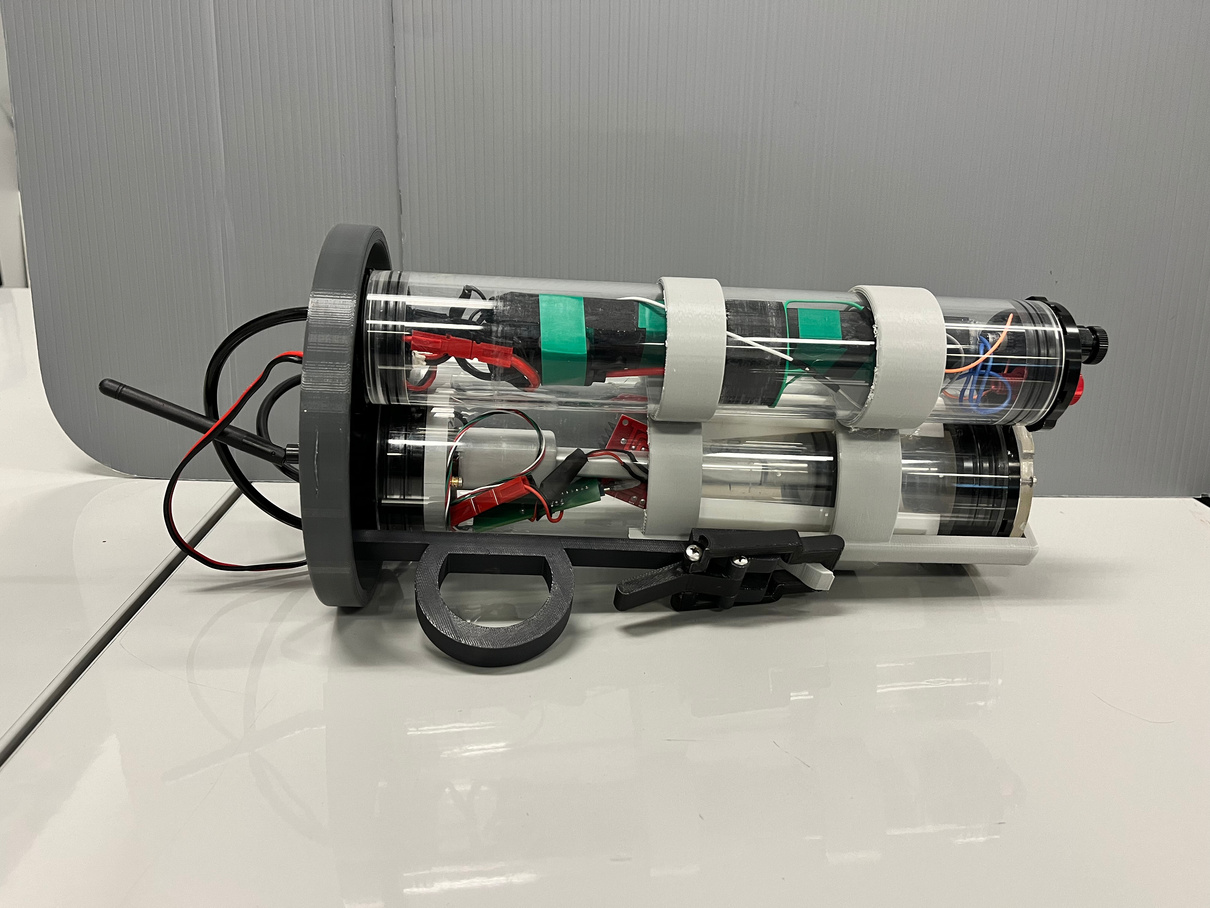
Geoff's dual-enclosure pressure housing with embedded electronics
Hardware Design November 2023

GO-BGC Float “Geoff”

An autonomous profiling float built for the MATE non-ROV device challenge, modeled after the Global Ocean Biogeochemical floats used in real oceanographic research. Geoff uses a syringe-based buoyancy engine to control depth, with embedded electronics — microcontroller, depth sensor, H-bridge motor driver, and a custom PCB — handling actuation and data acquisition inside a dual-enclosure pressure-rated housing.

View documentation
Full CAD assembly of the bowl denester mechanism
Automation Engineering Jun 2026 – Jul 2026

Bowl Denester — Chef Robotics

As a Mechanical Engineering Intern at Chef Robotics, I designed a mechanism to separate stacked bowls one at a time and place them onto a conveyor. The project walks through weighing three concept approaches, landing on a variable-pitch screw denester, and detailing the mechanism, electronics, and sourcing down to a buildable, ten-unit-ready design.

Design walkthrough
Personal Project Jun 2026 – Jul 2026

Whiteboard Cleaning Robot

A self-contained robot that scrubs ink off a whiteboard, built with another engineer who handled merging the electronics into the mechanism.

  • A center magnet pole is compressed by a spring between the second platform and the robot body, holding the whole assembly to the whiteboard.
  • Off-center scrubbers wrapped in microfiber buff the surface like a floor waxer as they spin — the off-axis rotation increases scrubbing power over a centered design.
  • A timing belt keeps the two scrubbers in phase up top so they never collide.
  • A rear skirt, also covered in microfiber, balances the robot while catching any residue the scrubbers leave behind.
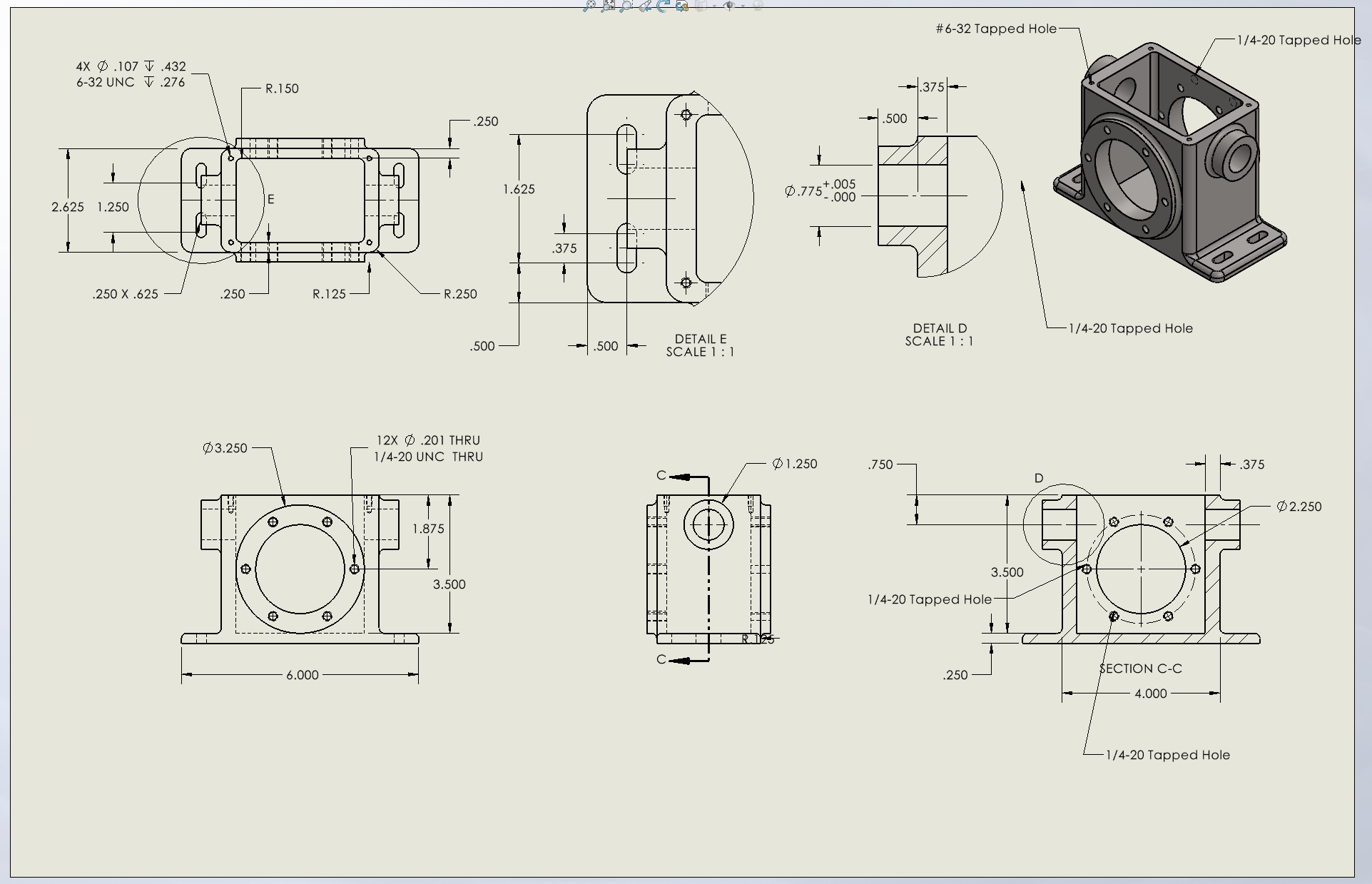
Housing assembly technical drawing
Coursework 2024 – 2025

Engineering Graphics

A gallery of technical drawing work — orthographic projections, section views, GD&T, formal drawing packages for a Housing assembly and Worm Gear Shaft, and the SolidWorks models created during the CSWA certification exam.

View gallery